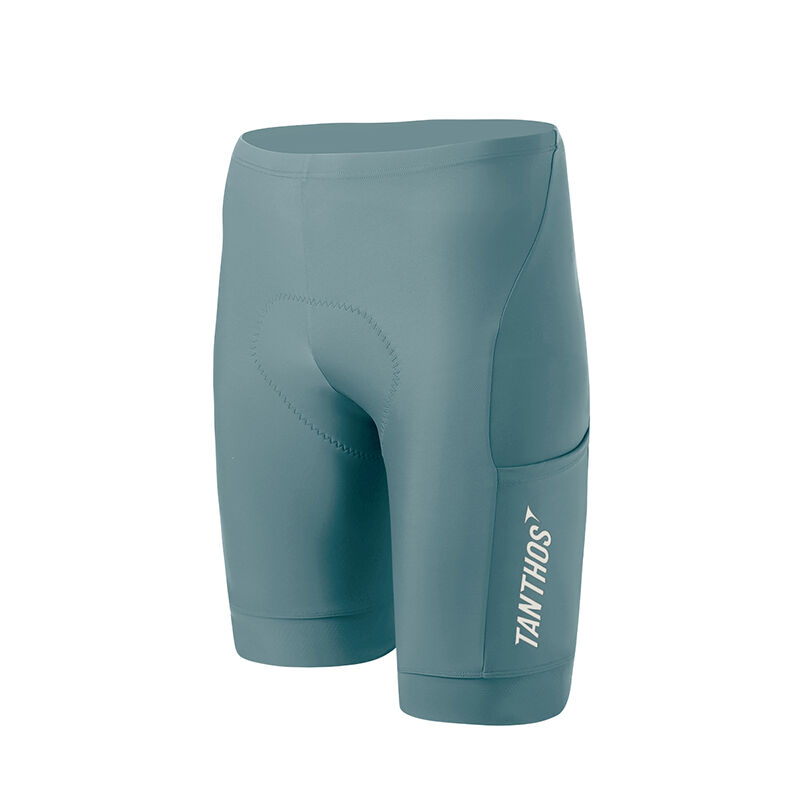
Not every long distance rider is looking for the same amount of padding or compression. All they really want is a piece of clothing that fits their body, weather, riding style and length without unnecessary hindrances.
A fit that remains stable
The piece should stay in place when seated pedaling, climbing, dropping and standing. Straps should be flat, leg grippers should not slip and chamois should stay in line. It's more important for stability than an overly tight fit.
Torso length and waist and hip size should be considered when sizing. A rider can wear the lower part, but find it causes too much tension or pain on the shoulders if the straps are too short. This is why it's important for brands to test a full size set, not just a sample of a specific base size.
A chamois matched to the ride
While it is common for endurance riders to require continuous support and hydration, that doesn't necessarily mean the thickest pad available. The best density map, coverage, edge profile and placement is determined by posture/ anatomy.
When describing a product, it should not be guaranteed except from a specified test method, such as an hour or distance rating. The term endurance is of little relevance if the construction and use for riding is not described as well.
Temperature and moisture control
The fabric needs to be adapted to the conditions. Lightweight bib shorts are for warm rides, full-length bib tights for cooler and thermal versions for insulation. No one wants to wear the same sweater in the summer and winter.
Moisture management encompasses the entire garment, the mesh straps, chamois face, seam placement and the ventilation. The advantage of fast drying may be comfort but is not water proof.
Useful details rather than inflated claims
Long-distance pillion riders might prefer easy to find pockets, reflective features, an easy-to-reach radio or phone mount, soft edges of the pillion, and long-lasting stitching. These pragmatic facts are easier to prove than those that say that compression will stop cramping, or that it will boost power by a large margin.
The criteria to test durability include material specifications, wash testing, seam inspection, print testing, and controlled wear trials. Statements like these last thousands of miles need proof and can't be used as a blanket marketing term.
Turning rider needs into a production brief
A short list is helpful which includes the rider group, the discipline, the climate, the posture, the duration, the size range, the chamois, the fabric, the pockets, the visibility, the branding, the target cost and the inspection criteria. It should be able to identify the features that are compulsory and those that are optional, to ensure that the sampling decisions are clear.
Tanthos provides OEM/ODM cycling apparel services. Brands should verify the material, certification documents, development procedures, sample approvals, production specifications and quality requirements of the brand selected product before the product is published or sold.
Frequently asked questions
What is the most important endurance feature
A stable fit is the basis. With a premium pad or fabric, if the garment moves or it is not the correct size, it won't work as it was designed.
Should a brand publish an hour rating
When only in relation to a defined method and clear conditions. If not, explain how it will be used and built, but do not guarantee its expected lifespan.
What should a factory sample approval include
Accept measurements, size grading, fabric and chamois references, artwork, color, seam construction, labels, packaging, workmanship criteria and all claimed performance properties.
About Tanthos
Tanthos is an OEM/ODM cycling apparel manufacturer that offers support for brands and teams. Each project needs to be checked for product specifications, availability of materials, scope of certification, sampling, cost and time of production. See more at www.tanthos.com.